
"Central America coffee market"
1000 article(s) found

Coffee characteristics, uses and Coffee producing areas in Guatemala & output, production and Marketing of Coffee products over the years
For the exchange of professional baristas, please pay attention to the coffee workshop (Wechat official account cafe_style) Guatemala is located in the north of Central America, west and north of Mexico, east of Belize and the Caribbean, southeast of Honduras and El Salvador, south of the Pacific Ocean. Topography: the terrain of Guatemala changes obviously and can be divided into three major parts: the northern lowland: Petn region, at an altitude of 20000.

Moderate acidity, fragrant and delicious lemon tree manor in central Central America in Nicaragua
Nicaragua is now one of the poorest countries in Central America. Due to its poor economic foundation, the coffee industry is still relatively backward, while coffee farmers are in extreme poverty. Fortunately, Nicaraguan coffee has received some foreign aid funds to improve the quality of its coffee. Coffee from Madagelba, Sinodega and Segovia in Nicaragua

Introduction to the description and treatment of taste and flavor in the characteristic producing areas of coffee farms in Latin America
El Salvador aroma 4% brightness 4.5% mellow 3% flavor 4.5% aftertaste 4.5% suitable for baking degree: if City/Full city city has a preference for thick flavor, it can be roasted a little deeper. Most people think of El Salvador as a war.

The best coffee beans.
How many kinds of coffee beans are there in the world? The best kind of coffee beans? There are countless varieties, the best are blue mountain coffee beans, but there are not many real blue mountain coffee beans, authentic blue mountain coffee beans grow in areas certified by the Jamaican government, and they are expensive because of their low yield and dangerous picking. Every year, more than 90% of the blue mountain coffee beans flow into the Japanese market and the global production is about 100 packets a year.

Tea tree essential oil-scented Nicaraguan lemon manor boutique coffee bean variety planting market price is simple
Cultivated coffee varieties: 10%Maragoipe, 30% Pacamara, 25% Bourbon, 20% Caturra, 15% Java coffee treatment: 95% full washing, 5% sun drying: scaffolding sun (Sun Dried Patios) flowering: January-February, mid-March, May-June harvest period December-March cup taste test: dried herbs, chocolate, sweet spices, sweet lime

Boutique Coffee Nicaraguan Coffee introduces Joy Manor in Central America
Nicaragua has finally returned to the boutique coffee market, and many roasters are now gradually treating Nicaraguan beans as a unique coffee producing area. These buyers' impression of Nepalese coffee has changed greatly, from using it as a matching bean to using it as a high-quality single bean, which shows that the quality of Nepalese coffee has improved a lot. In fact, recently many of them have come from the United States.

A brief introduction to the Market Price of Fine Coffee Bean varieties in Joy Manor with strong aroma
It is estimated that the income from coffee exports in 1998 will be about 1.6 billion US dollars, and Nicaraguan coffee production will drop sharply. Wei Kailaizheng coffee is Nicaragua's main export product. According to the president of the Nicaraguan Coffee Farmers' Federation, due to the poor harvest of coffee in Nicaragua's Pacific region, the country's total coffee production in 1998 may be 12% lower than that in 1997 and 1998.

A brief introduction to the flavor and taste of the manor in El Salvador, the smallest coffee-producing country in Central America.
The civil war in 1980 caused government forces and guerrillas to deal a blow to the coffee industry, as well as natural disasters, as well as the collapse in international raw bean prices between 1986 and 1987, all of which adversely affected the coffee industry. in fact, 80 years ago, the foreign exchange earned by coffee also assisted the country's clothing industry and contributed to the Ministry of Light Industry. And the marketing and export controlled by the government are even more disadvantageous to the whole industry.

A brief introduction to the planting Market Price of Fine Coffee beans in fragrant and delicious Happy Manor
Coffee is Nicaragua's main export. According to the president of the Nicaraguan Coffee Farmers' Federation, due to the poor harvest of coffee in Nicaragua's Pacific region, the country's total coffee production in 1998 may be 12% lower than that in 1997. In the coffee year of 1997 and 1998, Nicaragua harvested 1.422 million bags of coffee (each bag of 46kg), which has been producing 1% of coffee in the past 14 years.
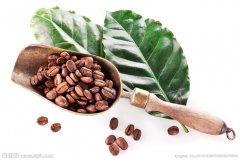
El Salvador is one of the small coffee countries of Central America.
Unique, mild coffee. El Salvador is one of the small countries in Central America and has a very dense population. Its coffee flavor is characterized by excellent balance. Today, this coffee accounts for 40% of the country's exports. The best quality coffee in January to March after 35% of the extra-hard beans exported to Germany. In the early 1990s, guerrilla warfare greatly damaged the country's national economy.

A brief introduction to the planting Market Price of El Qomolangma Fine Coffee Bean varieties
Salvadoran coffee ranks side by side with Mexico and Guatemala as producers of Asa and Merdo, and is fighting for the top one or two places in China and the United States with other countries. The highlands of origin are large coffee beans of all sizes, which are fragrant and mild in taste. Like Guatemala and Costa Rica, coffee in El Salvador is graded according to altitude, and the higher the altitude, the better the coffee

A brief introduction to the Market Price of Fine Coffee beans in Happy Manor with mediocre and soft Flavor
When tasting Nicaraguan coffee, it is best to drink cold water first, so that you can better feel its mellow taste. Drink coffee while it is hot, because the tannins in Nicaraguan coffee are easy to change during cooling, and the taste becomes sour, which will affect the flavor of the coffee. You can add the right amount of sugar, and then add cream. Enjoy a cup of high quality Niga

The story of coffee beans in Starbucks Parker Market introduces the story and characteristics of coffee flavor in Latin America.
Professional coffee knowledge exchange more coffee bean information please follow the coffee workshop (Wechat official account cafe_style) coffee bean matching knowledge Italian coffee bean formula sharing several friends and I in addition to our usual love to drink coffee also has a slight amount of business demand, we drink is to find our own reputation of home-baked boutique coffee beans, pick the place of origin also choose roast

The taste of balanced San Barra estate boutique coffee beans varieties planted market price profile
Honduras is a mountainous country in Central and North America with a population of more than 8.3 million and an area of about 112,000 square kilometers. Located in northern Central America. It is bordered by the Caribbean Sea to the north, the Gulf of Fonseca in the Pacific Ocean to the south, Nicaragua and El Salvador to the east and south, and Guatemala to the west. More than three-quarters of the territory is mountainous and plateau. Mountains extend from west to east, inland for lava plateau, mountainous

Introduction of Nicaraguan coffee bean producing countries located in central Central America
Nicaragua is now one of the poorest countries in Central America. Due to its poor economic foundation, the coffee industry is still relatively backward, while coffee farmers are in extreme poverty. Fortunately, Nicaraguan coffee has received some foreign aid funds to improve the quality of its coffee. Coffee from Madagelba, Sinodega and Segovia in Nicaragua
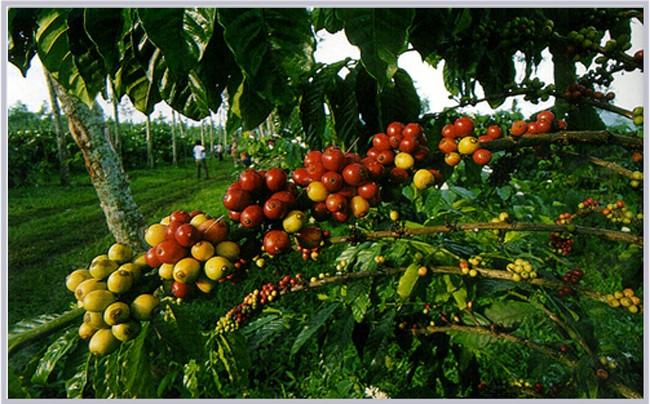
Coffee Estate Knowledge Points: Collection and classification of world boutique coffee estates in detail
Coffee comes from coffee beans, which are harvested and processed from the fruits of trees. Coffee trees grow at the equator as the center, between 25 degrees north and south latitude, known as the coffee belt in tropical or subtropical countries home, coffee beans are currently. Coffee comes from coffee beans, which in turn are harvested and processed from the fruits of trees. Coffee trees grow at the equator.

Guatemala Coffee Farmer and South Korea quickly sign Free Trade Agreement Guatemala Antigua Coffee Export
Professional coffee knowledge exchange more coffee bean information please follow the coffee workshop (Wechat official account cafe_style) local media reported that in order to avoid being isolated from the Asian market, Ricardo Arenas Menes, chairman of the Guatemalan Coffee Association (Anacafe), called on Guatemala to sign a free trade agreement between Central America and South Korea. According to reports, danger
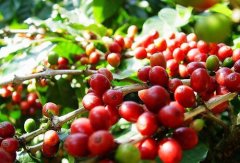
Unique, mild coffee El Salvador is one of the small countries in Central America.
Unique, mild-tasting coffee. ElSalvador is one of the small countries in Central America with a dense population. The flavor of its coffee is characterized by excellent balance. Today, this coffee accounts for 40% of the country's exports. 35% of the extra hard beans of the best coffee are exported to Germany from January to March. In the early 1990s, guerrilla warfare greatly damaged the country's national classics.
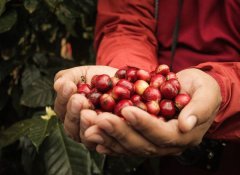
Costa Rica where coffee beans are grown in Central and South America.
Costa Rican coffee cultivation was introduced by Cuba in 1779 and exported for the first time in 1820. There are about 32000 coffee farmers, with an average planting area of less than one hectare (10000 hectares) per farmer. Costa Rica has a population of 41 billion (2006), with a coffee planting area of 82500 hectares and an annual production of 1.7 million bags (60kgs per bag). The annual domestic consumption is 380000 bags.

Coffee producing area of South America: which producing area of Colombian coffee bean brand has the best coffee?
Professional coffee knowledge exchange more coffee bean information please follow Coffee Workshop (Wechat official account cafe_style) Front Street-about Colombian coffee the potential of Colombian boutique coffee is full in the past, Colombia paid more attention to the commercial coffee bean market, but after 2001, Colombia began to enter the relatively niche boutique coffee market, compared with Brazil, which also belongs to Central and South America.